
How it works
How the macros are calculated
Every number on a recipe comes from its ingredient list. Here is exactly how, and where the estimate can be off.
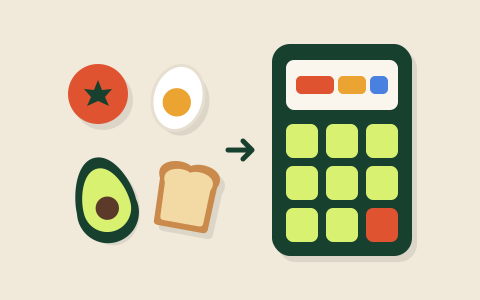
From ingredient line to grams
Each ingredient line is read for an amount, a unit and a food. Weights are used as written. Cups and spoons are converted with a density for that specific food, and counts such as “2 eggs” use a typical weight.
The food is matched to a nutrition database entry, the nutrients are scaled to the gram weight, and the lines are added up and divided by the number of servings.
What the badge means
A green badge means every counted ingredient was matched and weighed. An amber one means a line used an assumed weight or had no match. You can open “how each ingredient was counted” on any recipe to see the working.
Where it can be off
Raw and cooked weights differ a lot for rice, pasta and meat, so recipes should list them the way they are measured. Ingredients marked “to taste” are not counted. Frying oil that stays in the pan is counted even though you do not eat all of it.
Worth knowing
- These are estimates for planning, not laboratory measurements or medical advice.
Common questions
Why does my tracker show a different number?
Different databases, raw versus cooked entries and rounding all shift the result. A difference of 5–10% is normal.
Sources
General information, not medical or dietary advice. Speak to a doctor or registered dietitian about your own situation.