
Your kitchen
Cooking in a student kitchen
One fridge shelf, two pans and a microwave are enough. What to own, what to keep in the cupboard, and how to stay safe in a shared kitchen.
The minimum kit
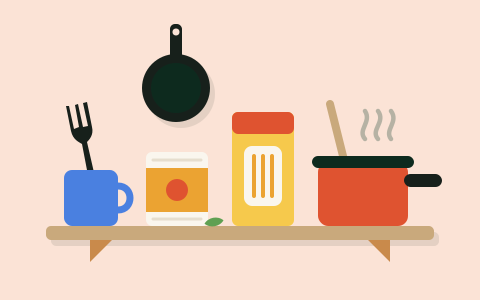
A non-stick frying pan, a medium saucepan with a lid, a sharp knife, a chopping board, a baking tray, a few lidded containers and a kitchen scale cover almost everything. A microwave handles porridge, rice pouches, jacket potatoes and reheating. If you are counting macros, buy the scale first: it takes the guesswork out of every portion.
Save what you actually have under My kitchen: every search then hides the recipes you cannot make, and recipe pages flag anything you are missing. Each recipe step lists the equipment it needs, so you can see before you start whether one pan is really enough.
A cupboard that makes meals
Keep a short list of staples that last: oats, rice, pasta, tinned tomatoes, tinned beans and chickpeas, tinned tuna, frozen vegetables and frozen fruit. Frozen and tinned vegetables count towards your five a day, and they keep until you need them, which matters when your share of the fridge is one shelf.
For protein on a budget, eggs, tinned fish, beans, lentils, milk, yogurt and frozen chicken are common low-cost choices. Cooking a double portion and eating the second one the next day is the simplest meal prep there is, and it needs no extra equipment.
Sharing a fridge safely
The Food Standards Agency’s student guide is short and worth following. Keep raw meat and fish covered on the bottom shelf where you can, away from ready-to-eat food. A use-by date is about safety, so do not eat food past it; a best before date is about quality. Wash or change cloths, sponges and tea towels regularly.
Cool leftovers, cover them and get them into the fridge or freezer within one to two hours, then eat them within 48 hours and reheat them only once, until steaming hot. Rice needs more care: cool it within an hour, keep it for no more than a day and reheat it once. Packaged food can be frozen right up to its use-by date.
Worth knowing
- The storage times here follow UK Food Standards Agency guidance, which is more cautious than advice in some other countries. Follow the guidance where you live.
- Do not rely on the sniff test for food with a use-by date, and do not wash raw chicken: it spreads bacteria around the sink.
Common questions
Can I eat properly with only a microwave?
Yes. Porridge, eggs, rice pouches, jacket potatoes, steamed vegetables and tinned fish or beans make complete meals. Set “Only these…” to Microwave in the recipe search to see what fits.
What are the cheapest ways to hit a protein target?
Eggs, tinned tuna, dried or tinned beans and lentils, milk, yogurt and frozen chicken are common low-cost choices. Sort any search by “Protein per calorie” and compare prices where you shop.
Sources
General information, not medical or dietary advice. Speak to a doctor or registered dietitian about your own situation.


